Featured · E-commerce
PowerTrack India: SAGA's D2C store
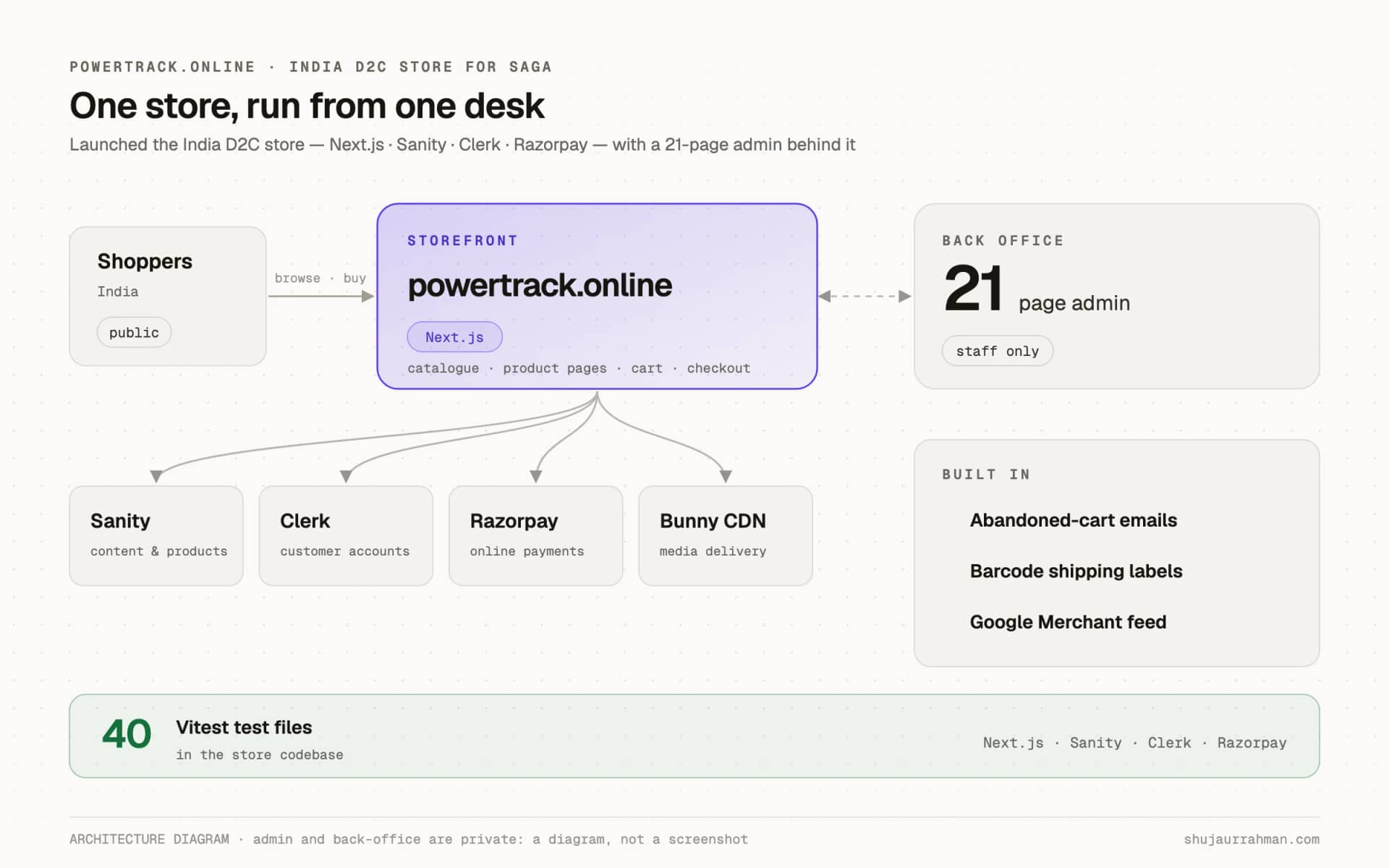
I launched powertrack.online, SAGA's India D2C store, on Next.js, Sanity, Clerk and Razorpay, with a 21-page admin, abandoned-cart emails, barcode shipping labels, a Google Merchant feed and 40 Vitest test files.
- 21pages in the store admin
- 40Vitest test files
01 · The brief
Sell a configurable hardware system online, across India
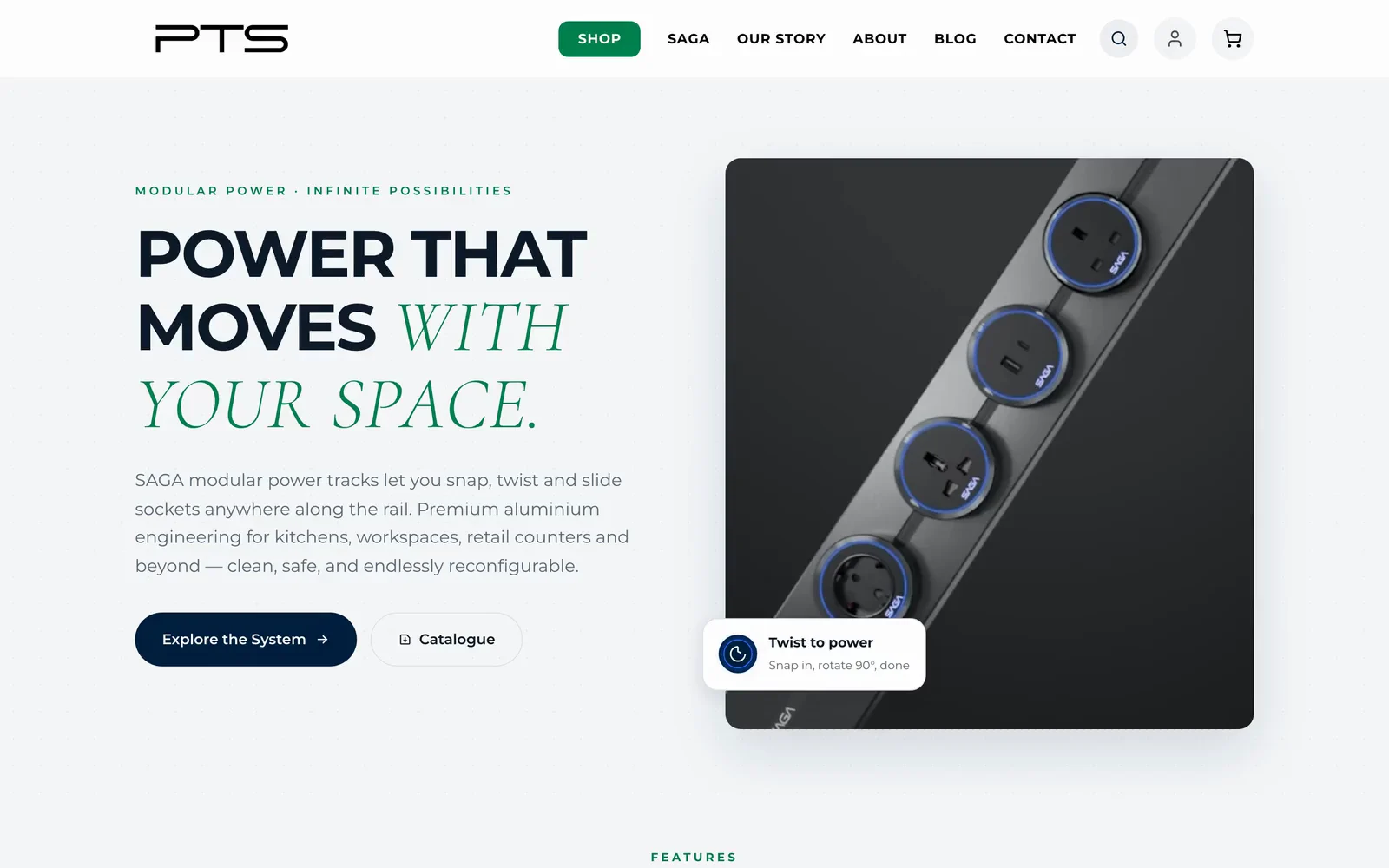
SAGA makes a modular power track: an aluminium rail with socket modules that twist in and slide anywhere along it. SAGA is a brand of The Sixty One (61 FZCO) in Dubai, and Material Matters distributes it in India. SAGA needed its own direct-to-consumer store for Indian homes, workspaces and trade buyers.
As founding engineer for SAGA and Material Matters, I launched that store, powertrack.online, and I run it. It was a harder problem than a product grid:
- Products are configured, not just picked. Rails, adaptor modules, colours and fixed-size packs all come with rules.
- Non-developers own the content. Products, photos and posts have to change without a code change.
- Payments and delivery are Indian. Prices are in rupees, payment goes through Razorpay, and delivery covers the whole country.
- The store is heavy on media. It has a video hero, customer reels, product photography and PDF catalogues.
- Operations can't wait for an engineer. Orders, shipping labels, follow-up emails and the shopping feed need their own tools.
- Role
- Founding engineer, launch to production
- Company
- The Sixty One (61 FZCO), for SAGA and Material Matters
- Timeline
- 2025 — Present
- Stack
- Next.js · Sanity · Clerk · Razorpay · Bunny CDN
- Scope
- Storefront · pack builder · checkout · admin · ops tools
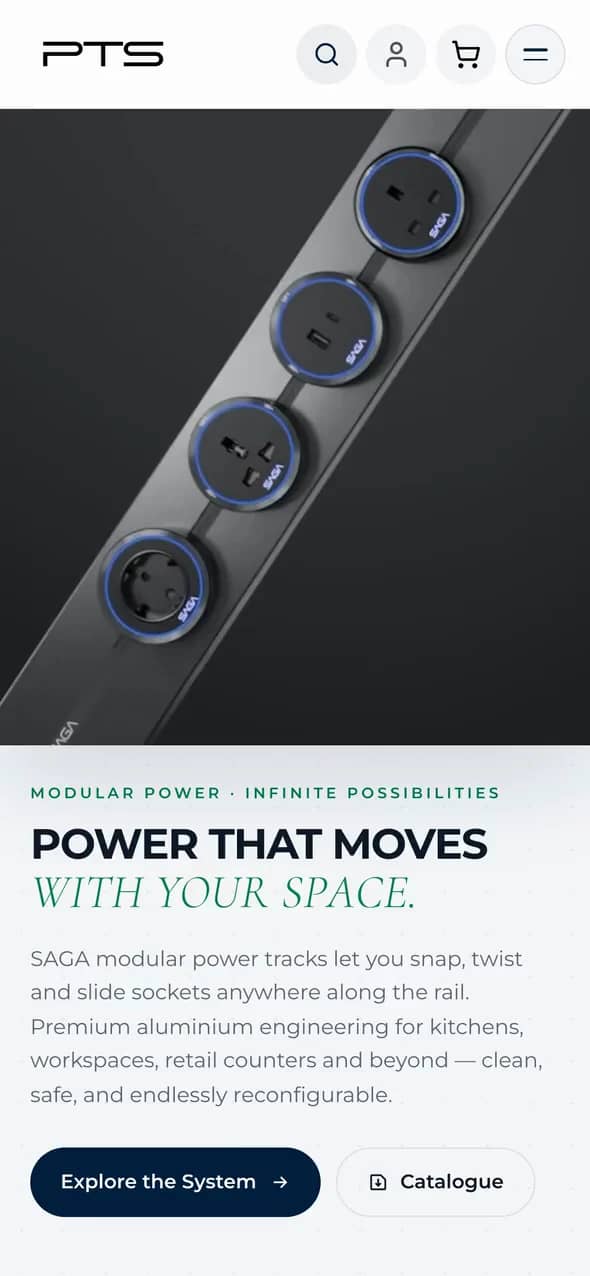
The storefront home on a phone: hero, Why SAGA and Shop by category
powertrack.online02 · The storefront
A pack builder that enforces the rules for the buyer
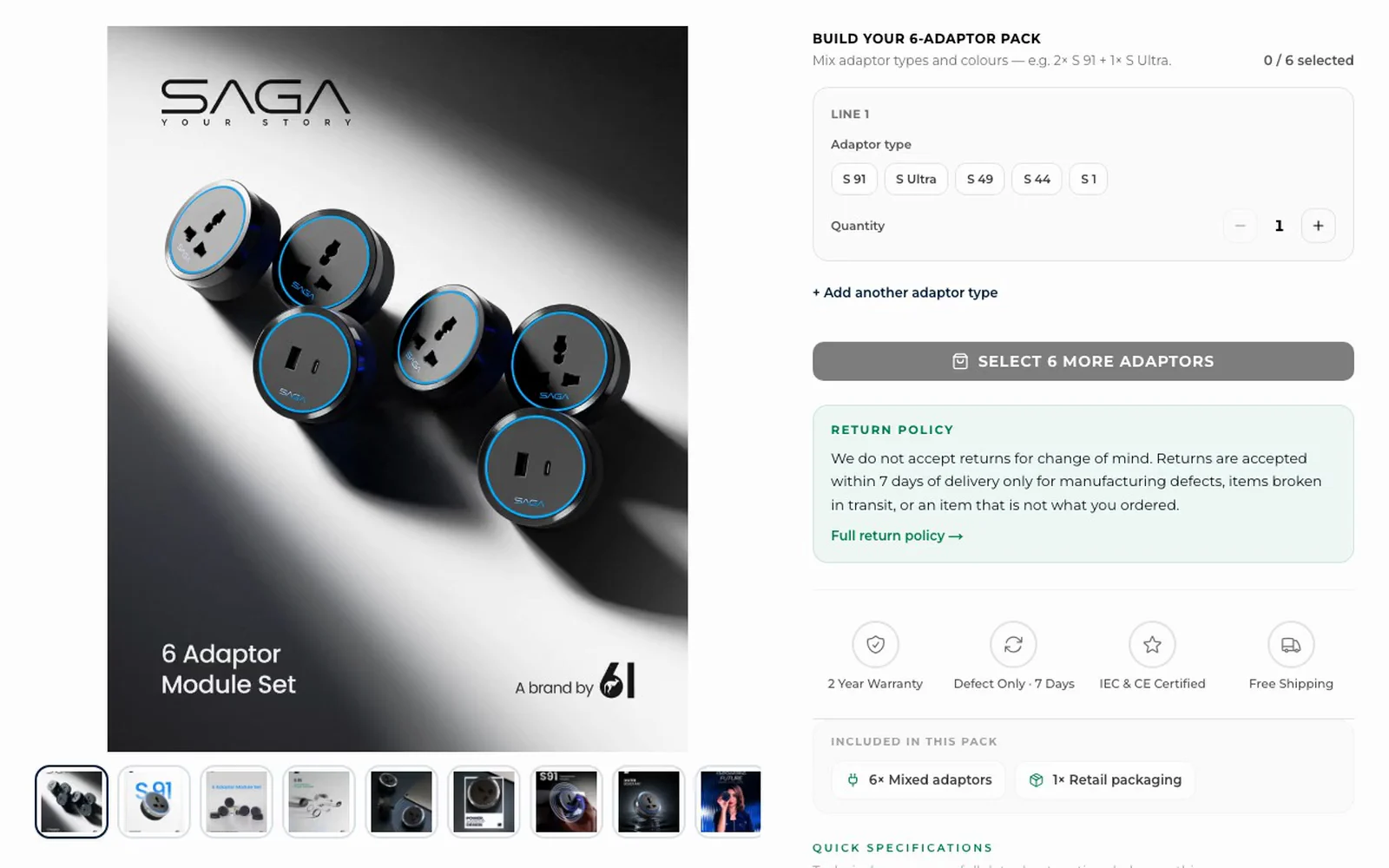
The bundle products sell a fixed number of adaptors, and buyers want to mix them. On the 6-adaptor pack, each line picks an adaptor type (S 91, S Ultra, S 49, S 44 or S 1), a colour and a quantity. A running count shows how many of the six are chosen, the gallery switches to the adaptor being configured, and a "Your pack" summary lists every line.
The add-to-cart button stays locked and counts down ("Select 4 more adaptors") until the pack is complete. The rule lives in the interface, so an incomplete pack can't be added to the cart.
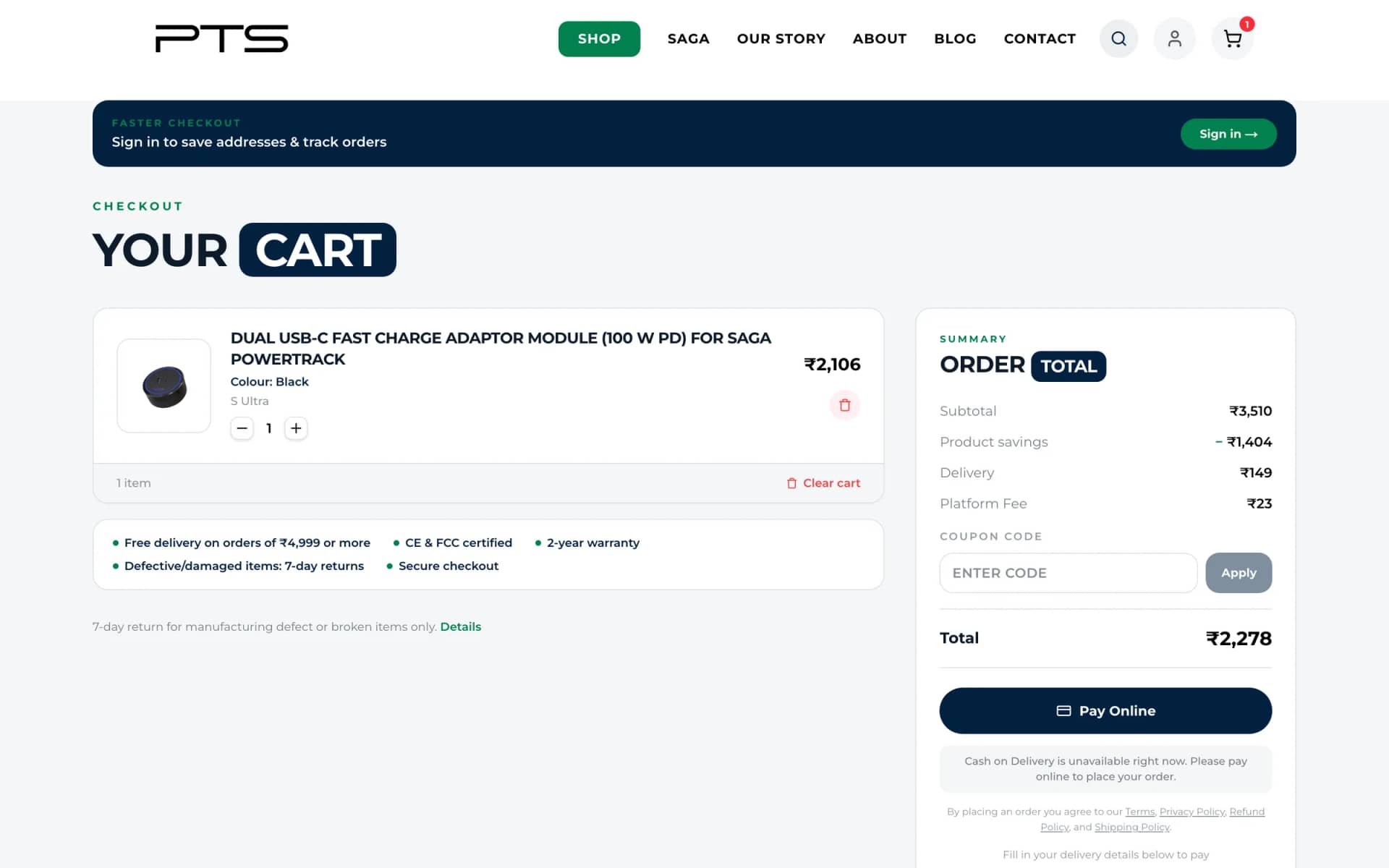
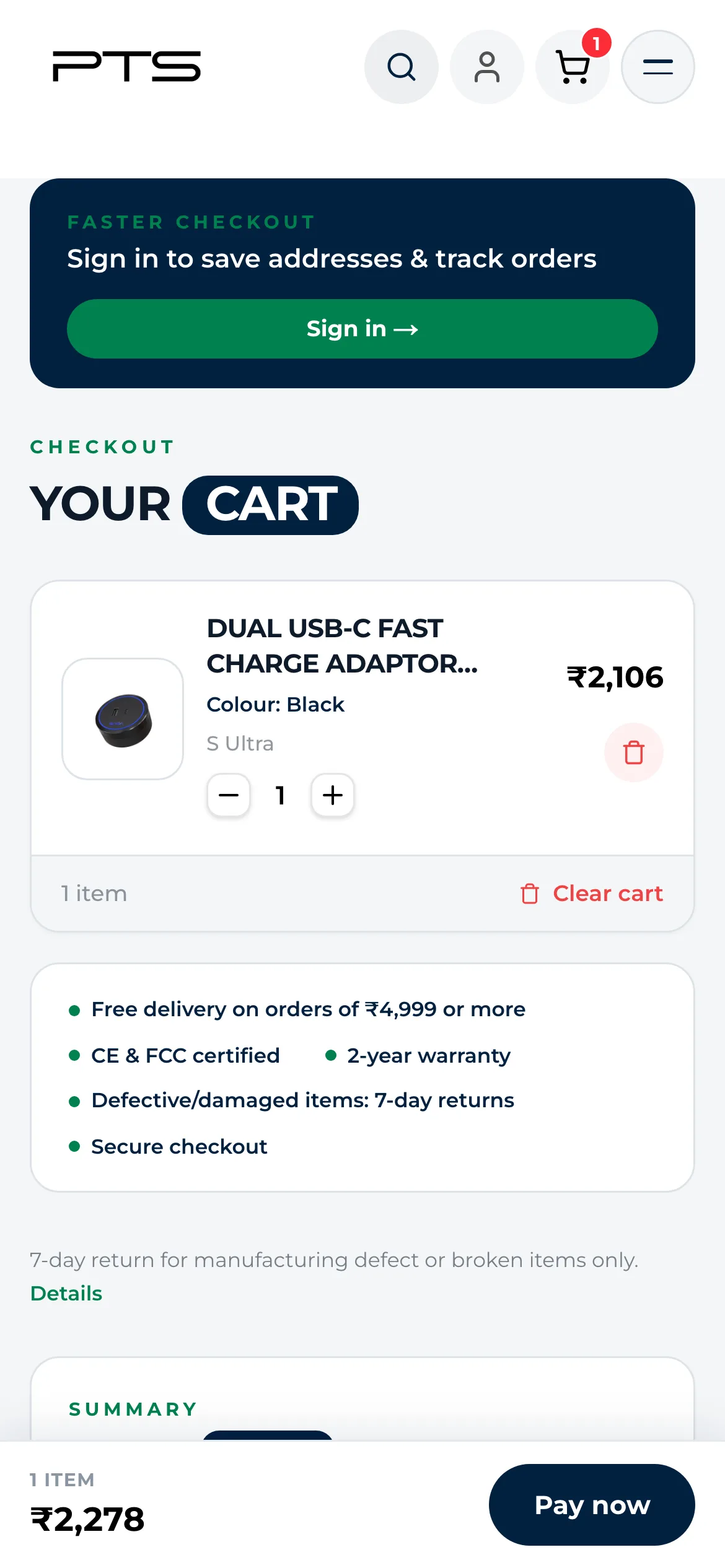
Around the builder sit a shop with category filters and sorting, product pages with colour swatches and live stock, and a cart that doubles as the checkout, with coupons, a full fee breakdown and Razorpay.
Pages built for search
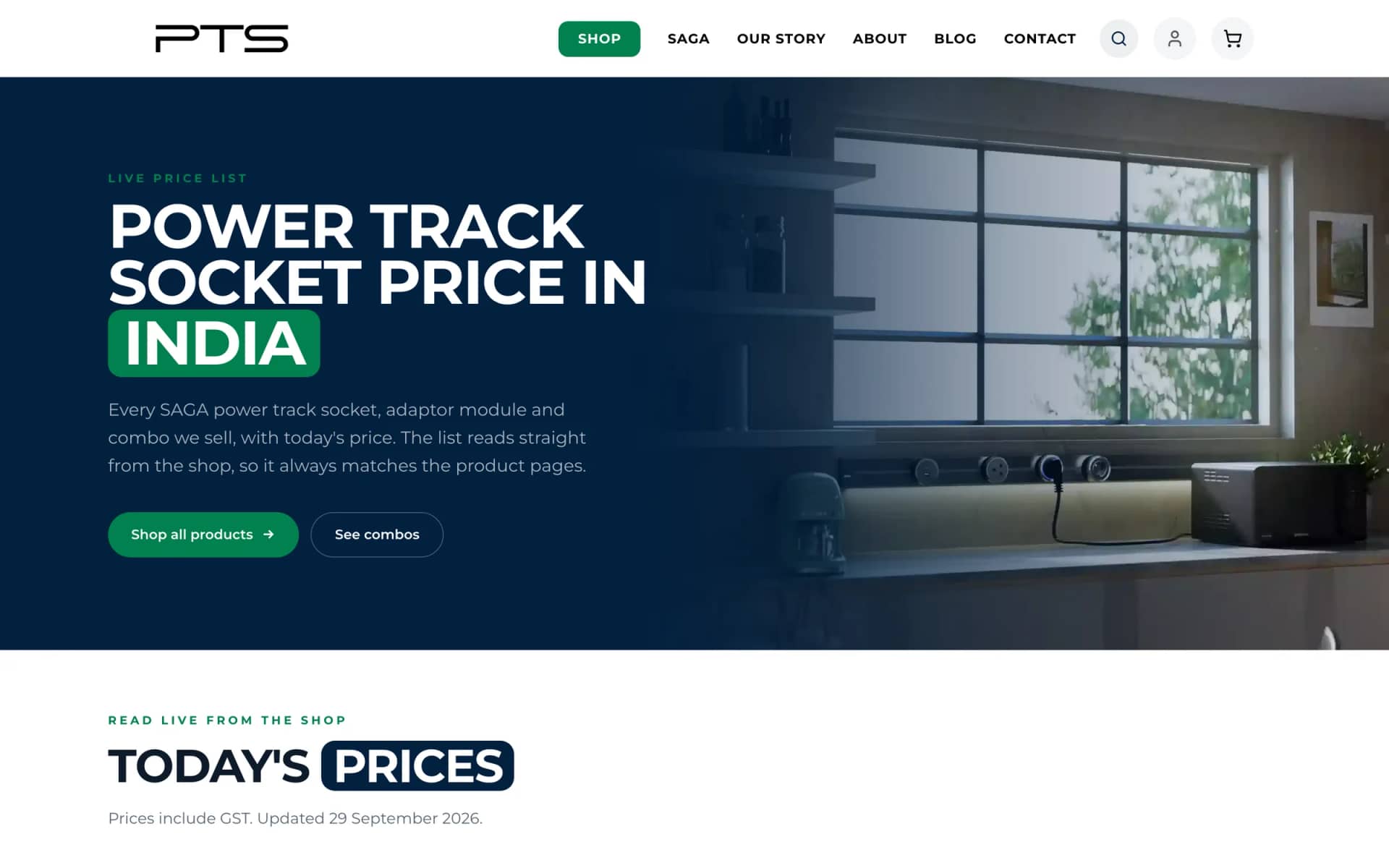
The store answers search queries with pages of their own. Its sitemap lists 4 category landing pages, 6 search landing pages (price, installation, where to buy, and use in the kitchen, office and home) and the SAGA Journal (16 posts, the first two written by me).
The price list reads straight from the shop, so it always matches the product pages. Product pages carry Offer and shipping structured data, including delivery times and regions; the store-wide return policy is marked up once on the home page. Category pages carry breadcrumbs and FAQs, and so do the newer journal guides.
03 · Under the hood
One store, run from one desk
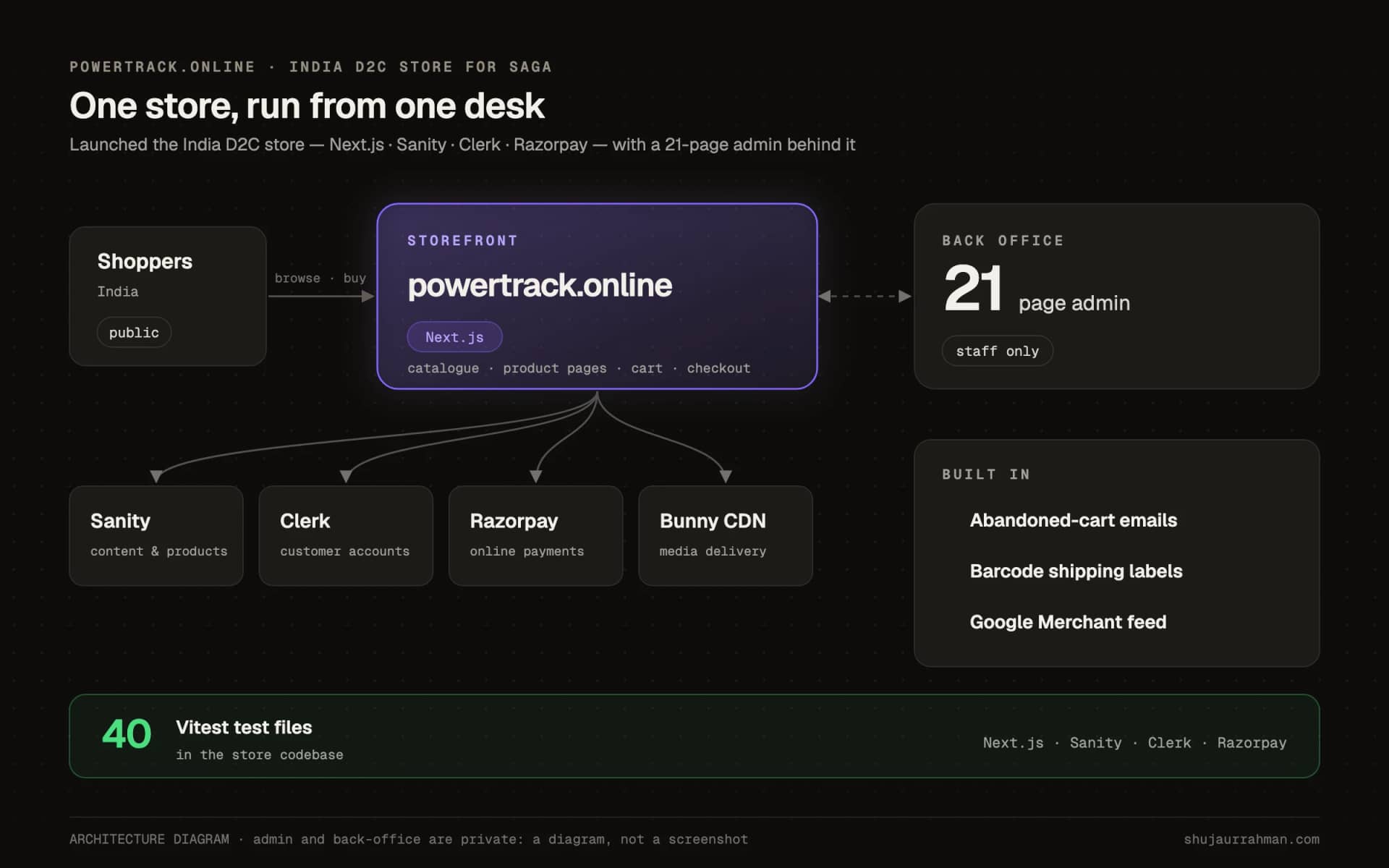
The storefront is Next.js (App Router) on Vercel, served from the Mumbai region. Each service does one job:
- Sanity holds products and posts. Sanity Studio is embedded in the site for the team.
- Clerk runs customer accounts, so buyers can save addresses, track orders and download them as PDFs.
- Razorpay takes online payments.
- Bunny CDN delivers the heavy media: the hero video, customer reels, photos and catalogue PDFs.
Behind the storefront sits a private 21-page admin, the Material Matters back office. I launched the store with the tools to run it: abandoned-cart emails, barcode shipping labels and a Google Merchant feed, plus 40 Vitest test files.