Research
IIT Roorkee Built Environment Lab
During a research internship at IIT Roorkee's Built Environment Lab, I compared ML models for eye-blink fatigue detection for building automation, reaching 95% accuracy. I also built and deployed the lab's public website on Next.js and Vercel, with a scroll-driven video hero and its nine research areas.
- 95%accuracy reached comparing ML models for eye-blink fatigue detection
01 · Overview
Two jobs in one internship
From January to March 2025 I was a research intern at the Built Environment Lab, part of IIT Roorkee's Department of Architecture and Planning. The lab's research areas run from the life-cycle energy of buildings to neuro-architecture, urban safety and kinetic facades.
My internship had two parts:
- Research: compare machine-learning models that detect fatigue from eye blinks, as an input for building automation.
- Web: build and deploy the lab's public website.
- Role
- Research Intern
- Lab
- Built Environment Lab, Dept. of Architecture & Planning, IIT Roorkee
- Timeline
- Jan — Mar 2025
- Research
- Python · OpenCV · scikit-learn · TensorFlow
- Website
- Next.js · Tailwind CSS · Vercel
02 · Research
Eye-blink fatigue detection
I compared machine-learning models for detecting fatigue from eye blinks, as an input for building automation, working in Python with OpenCV, scikit-learn and TensorFlow, and reached 95% accuracy. The research itself is unpublished, so the visuals here show the website.
03 · The website
A lab site that opens on the lab
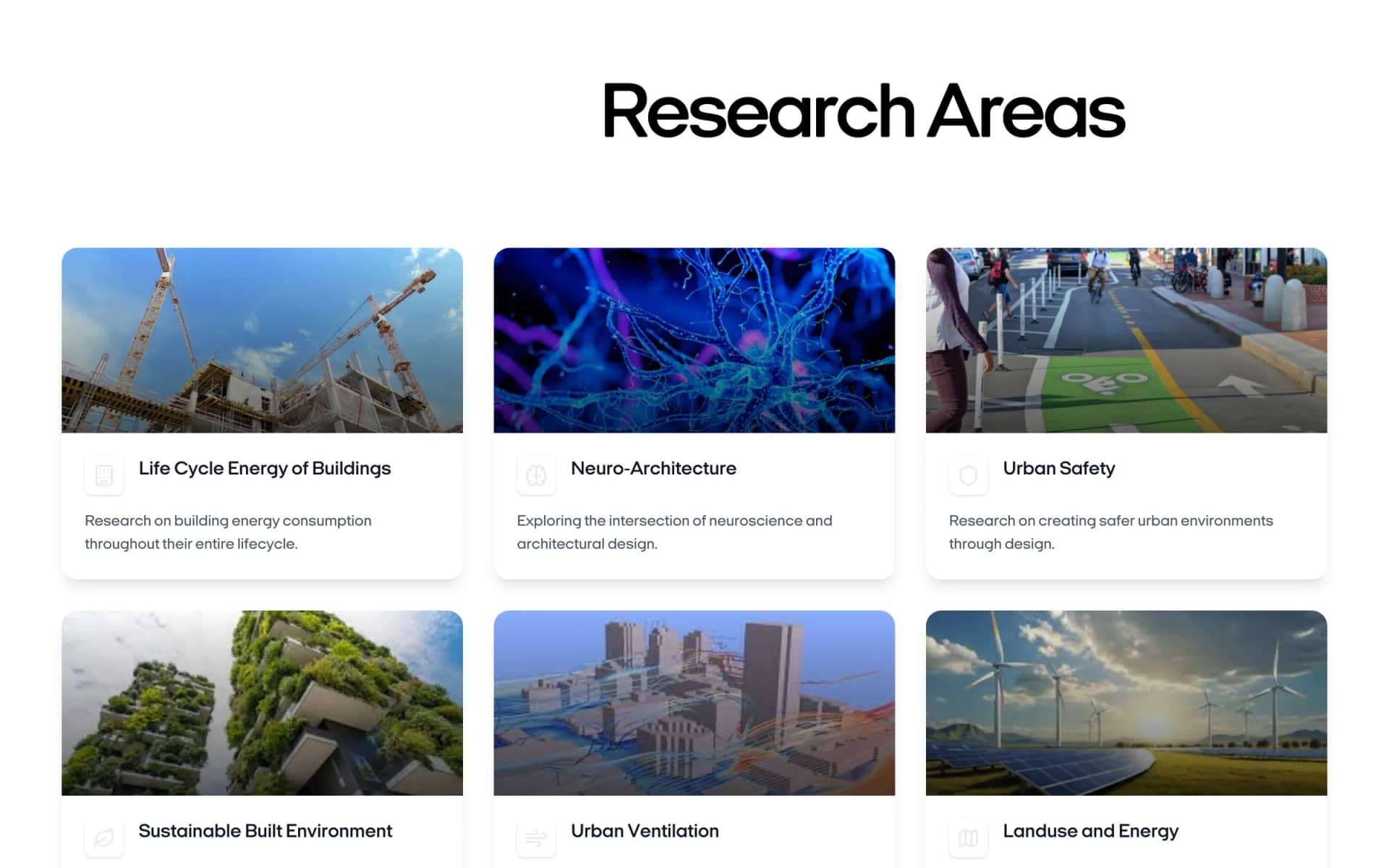
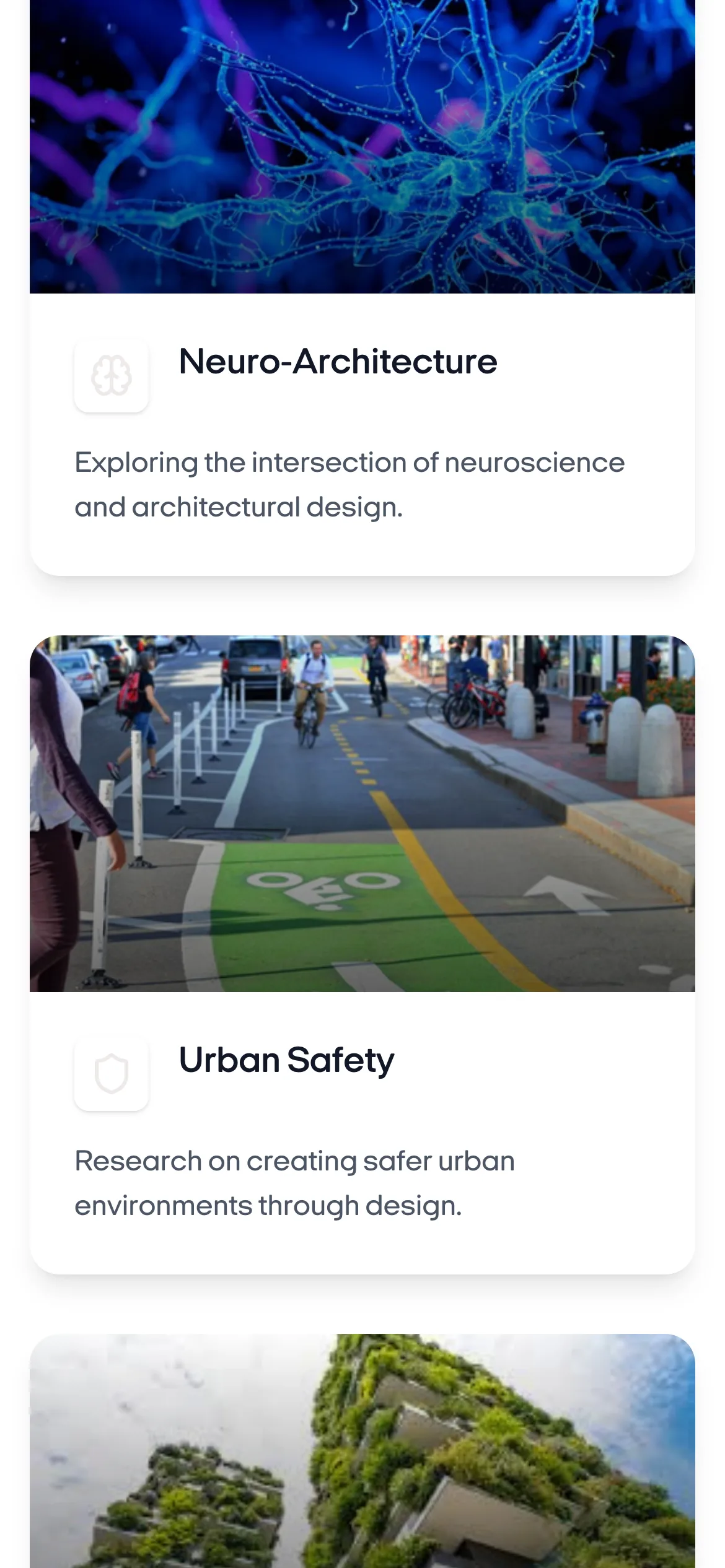
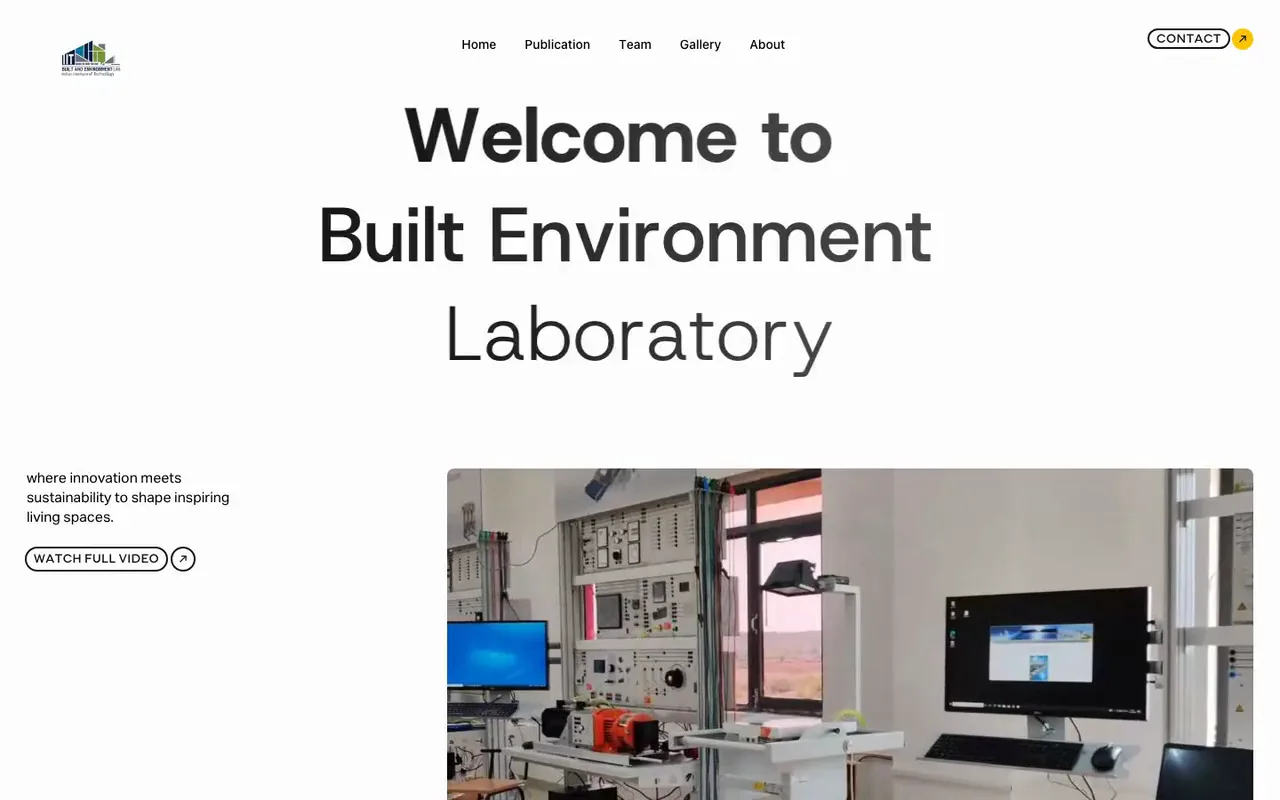
The home page starts with the lab itself. A video of its equipment grows to fill the screen as you scroll, beside the line "where innovation meets sustainability to shape inspiring living spaces". Below it come an introduction and nine research-area cards, from Life Cycle Energy of Buildings to Kinetic Facades.
I built the site with the Next.js App Router and Tailwind CSS and deployed it on Vercel. The hero video is served from Sanity's CDN. Before it, I made a first version in PHP in January 2025. The Next.js site is the one live today, and its footer reads "Crafted by Shuja ur Rahman".